Conseils
The spiritual benefits of Umrah during Ramadan
Almanasiq Editorial Team · Published 2026-02-05
Umrah in Ramadan has a special place in the prophetic teachings. Its promised reward is an invitation to sincere worship, repentance and kindness—not a replacement for the obligatory Hajj or a guarantee of a particular emotional experience. Prepare for the journey with both spiritual purpose and realistic limits.
Umrah in Ramadan has a special place in the prophetic teachings. Its promised reward is an invitation to sincere worship, repentance and kindness—not a replacement for the obligatory Hajj or a guarantee of a particular emotional experience. Prepare for the journey with both spiritual purpose and realistic limits.
A reward compared with Hajj
What the hadith means
Sahih al-Bukhari 1782 relates the Prophet’s encouragement to perform Umrah in Ramadan and its reward being comparable to Hajj. This concerns reward: an Umrah does not become the Hajj itself or discharge the obligation of Hajj for someone on whom it is due. Nor does a tourist or Umrah visa authorise Hajj.
Good deeds and repentance
The month offers opportunities for prayer, charity, Quran recitation and care for others. Avoid turning these virtues into a numerical formula promising an exact multiplied return for every activity. Acceptance and reward belong to Allah.
Sahih al-Bukhari 1773 describes expiation between Umrahs. Approach this with sincere repentance and a wish to repair wrongs, not as permission to disregard obligations or other people’s rights. Ask qualified religious guidance about questions that affect your own responsibilities.
Worship in the holy cities
Fasting and shared worship
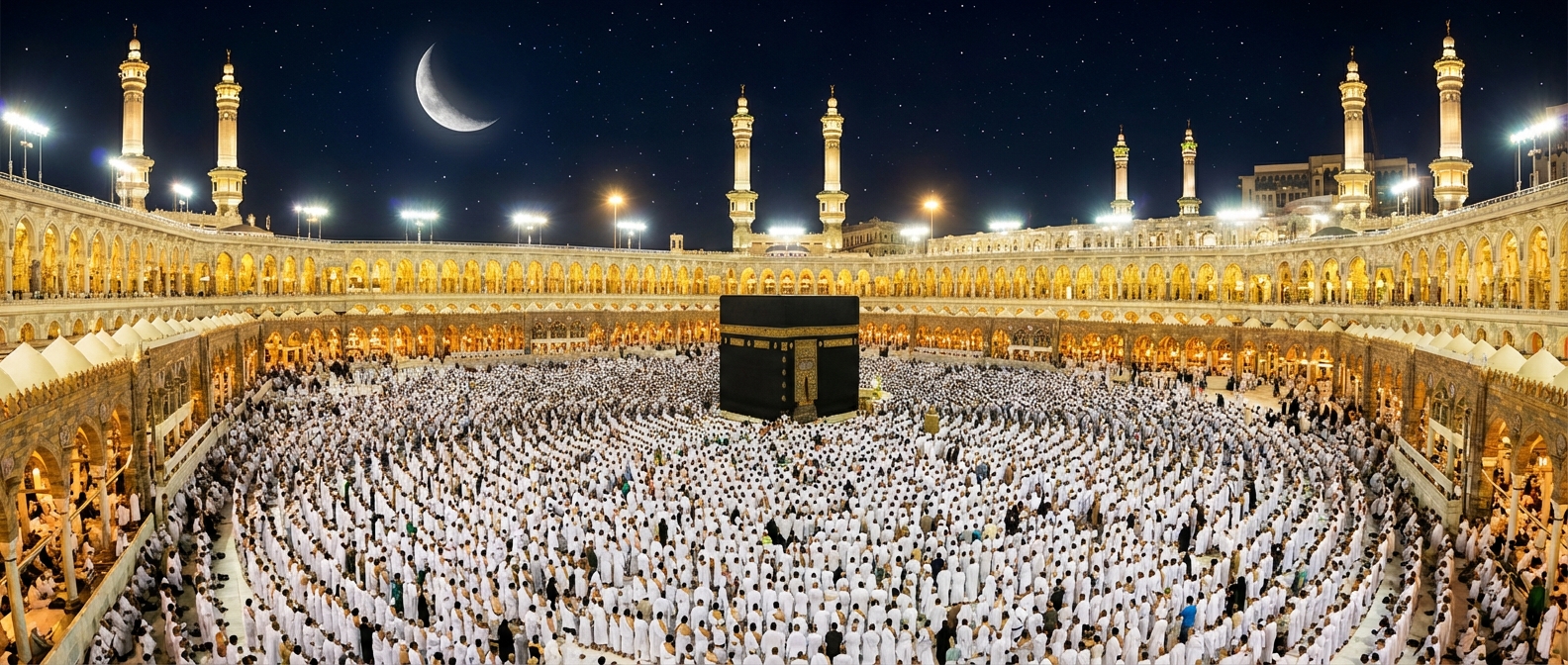
Breaking the fast with fellow Muslims and attending night prayers can make the unity of the community especially tangible. Pilgrims arrive with different languages, customs and levels of religious knowledge. Make space for others, follow the mosque’s instructions and avoid treating a particular place in the crowd as something you are entitled to secure.
Some people feel intense emotion; others feel tired, distracted or quiet. Neither reaction alone measures the sincerity or acceptance of the journey. Spiritual enthusiasm also does not make heat, illness or exhaustion harmless.
Seeking Laylat al-Qadr
Surah al-Qadr describes the Night of Decree as better than a thousand months. The prophetic teaching encourages seeking it in the last ten nights. Do not promise that a ticket for one specific night guarantees witnessing it, or treat the calendar as a precise calculator of a person’s reward.
Listening with understanding
Quran recitation in Makkah can encourage reflection on its message and the history of revelation. Read an explanation in English or another language you understand before the journey. Listening carefully and considering a short passage may be more valuable to your learning than trying to record an entire prayer on a phone.
Personal and spiritual growth
Simplicity and humility
The journey can be a chance to reconsider how much comfort, shopping or public recognition you actually need. Ihram is not a competition in hardship. A suitable room, assistance equipment or rest may help you worship responsibly; none should be used to judge another pilgrim’s devotion.
Practising patience
Queues, shared rooms and changing arrangements expose ordinary habits. Responding calmly, keeping promises and apologising after an impatient remark are concrete ways to practise better character. Plan enough time so that avoidable rushing does not repeatedly test everyone around you.
Renewing intentions
Set aside time for repentance and honest reflection. Write down one relationship to repair, one obligation to take more seriously and one unhelpful habit to address. These are personal aims, not a claim that every traveller will undergo a dramatic transformation.
Community and service
Meeting Muslims from different backgrounds
For travellers from Europe, the UK, Canada and the US, the holy cities offer encounters beyond their usual local community. Use simple language, listen patiently and do not assume that English is understood by everyone. A respectful gesture or practical help can matter more than a long conversation.
Remembrance without disturbing others
Shared devotion does not require shouting over nearby pilgrims or imposing one group’s recitation on everyone. Follow the prayer and preserve space for people making their own supplications. Do not claim that a group’s volume guarantees acceptance.
Help that respects dignity
Assist a companion with their agreed needs, share useful directions and alert staff when someone needs help. Ask before moving a wheelchair or photographing another person. Keep passages open, dispose of rubbish properly and avoid taking more food or water than you need.
Bringing the benefits home
Build a manageable routine
Choose a small practice you can maintain alongside work, study and caring responsibilities: regular Quran reading, more attentive prayers or dependable charitable giving. Do not measure progress against a fictional percentage of pilgrims who supposedly remain transformed years later.
Reconsider priorities
After returning across time zones, allow recovery and gradually rebuild daily routines. Discuss practical changes with your household rather than making commitments on their behalf. Sustainable change can be quiet and gradual.
Stay involved locally
Support your mosque or a trustworthy community initiative, share carefully sourced lessons and help future pilgrims prepare. Distinguish your personal experience from universal rules: a gate, permit process or hotel arrangement that worked for you may change.
Prepare for depth rather than exhaustion
Before departure
Learn the sequence of Umrah, practise the essential remembrances and resolve religious questions with a qualified teacher. Prepare a short personal supplication list. Check current permits, health requirements and travel advice; Ramadan 2026 has already passed at this September review, so future journeys need their own seasonal checks.
During the stay
Balance worship, meals, sleep and companionship. Travellers and people who are ill may have specific fasting rulings; discuss your circumstances with a qualified scholar and clinician where relevant. Do not ignore serious symptoms in an effort to keep pace with a group.
Quality and continuity
Repeated Umrahs are not a substitute for understanding the rite, following permit rules or caring for your body. Seek advice before organising additional rites. For practical preparation, use our complete Umrah guide and health-requirements guide. May Allah accept your worship and help you preserve what you learn.
Frequently asked questions
Why is Umrah in Ramadan especially meritorious?
Sahih al-Bukhari 1782 describes its reward in comparison with Hajj. This does not replace the obligatory Hajj or make the two rites identical.
Which part of Ramadan should I choose?
The virtue of Umrah in Ramadan is not restricted to the final nights. Choose dates you can manage; seeking Laylat al-Qadr in the last ten nights does not require a journey you cannot safely afford or undertake.
How can I balance fasting with the rites?
Plan rest and suitable meal times, and seek individual religious and medical advice about travel, illness or other relevant circumstances. Do not assume devotion removes physical risks.
Can I perform several Umrahs during one stay?
Ask qualified guidance about your circumstances and comply with current permits and access rules. Do not make repeated rites a numerical target at the expense of obligations, other pilgrims or your health.
How can the benefits last after I return?
Choose modest, regular practices and responsibilities you can sustain. Emotional intensity during travel is not the only measure of lasting growth.
Is Ramadan Umrah more physically demanding?
Fasting, crowded spaces, altered sleep and long travel can add demands. Prepare for your actual needs and use assistance when appropriate.
How should I prepare spiritually?
Study the rites, renew your intention, practise useful supplications and reflect on repentance and others’ rights. Leave room for questions rather than memorising a script without understanding.
Sources
- Sahih al-Bukhari 1782 — Umrah in Ramadan — The report about the reward of Umrah in Ramadan.
- Sahih al-Bukhari 1773 — The virtue of Umrah — Umrah and expiation; not a licence to neglect repentance or other duties.
- Sahih al-Bukhari 2020 — Seeking Laylat al-Qadr — Seeking the night within the last ten nights.
- Quran, Surah al-Qadr — The Night of Decree and its spiritual significance.
- Saudi Ministry of Health — Pilgrims’ health — Find the current and distinct Hajj and Umrah health documents.
FAQ
Why is Umrah in Ramadan especially meritorious?
Sahih al-Bukhari 1782 describes its reward in comparison with Hajj. This does not replace the obligatory Hajj or make the two rites identical.
Which part of Ramadan should I choose?
The virtue of Umrah in Ramadan is not restricted to the final nights. Choose dates you can manage; seeking Laylat al-Qadr in the last ten nights does not require a journey you cannot safely afford or undertake.
How can I balance fasting with the rites?
Plan rest and suitable meal times, and seek individual religious and medical advice about travel, illness or other relevant circumstances. Do not assume devotion removes physical risks.
Can I perform several Umrahs during one stay?
Ask qualified guidance about your circumstances and comply with current permits and access rules. Do not make repeated rites a numerical target at the expense of obligations, other pilgrims or your health.
How can the benefits last after I return?
Choose modest, regular practices and responsibilities you can sustain. Emotional intensity during travel is not the only measure of lasting growth.
Is Ramadan Umrah more physically demanding?
Fasting, crowded spaces, altered sleep and long travel can add demands. Prepare for your actual needs and use assistance when appropriate.
How should I prepare spiritually?
Study the rites, renew your intention, practise useful supplications and reflect on repentance and others’ rights. Leave room for questions rather than memorising a script without understanding.