Conseils
Duas for tawaf and sa’i: a practical Umrah guide
Almanasiq Editorial Team · Published 2026-02-05
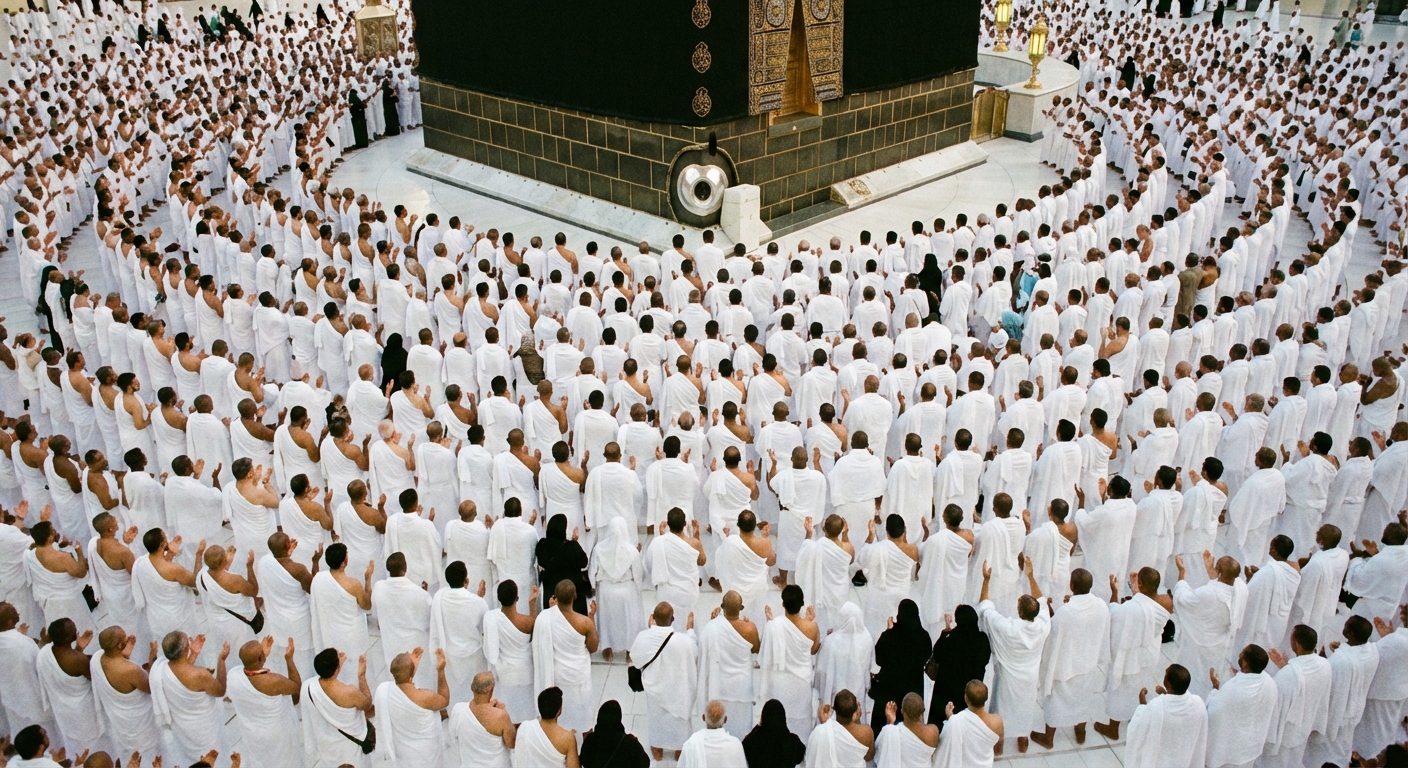
Learn a few well-sourced remembrances, understand their meaning and leave room for personal supplication. Tawaf and sa’i do not require a different compulsory dua for every circuit or length. You can ask Allah for your needs in English or another language you understand while remaining considerate of other pilgrims.
Learn a few well-sourced remembrances, understand their meaning and leave room for personal supplication. Tawaf and sa’i do not require a different compulsory dua for every circuit or length. You can ask Allah for your needs in English or another language you understand while remaining considerate of other pilgrims.
Remembrance during tawaf
Begin with a clear intention
Know which rite you are performing. Intention is not a compulsory public speech, and you do not need to invent a spoken formula because you cannot read Arabic fluently. Learn the practical sequence separately so that reading a dua card does not distract you from the route.
At the Black Stone
Sahih al-Bukhari 1613 records the Prophet pointing towards the corner and saying takbir. The simple remembrance is:
اللَّهُ أَكْبَرُ
Allahu akbar — Allah is greater.
Do not push or stop the moving crowd to touch the Stone. Follow the appropriate gesture from a safe place. This reference supports takbir; it does not establish an obligatory extra verbal formula for each circuit. Do not turn the gesture into prolonged waving or a photograph opportunity.
Between the Yemeni Corner and the Black Stone
Abu Dawud 1892 records this Quranic supplication, also found in Quran 2:201:
رَبَّنَا آتِنَا فِي الدُّنْيَا حَسَنَةً وَفِي الْآخِرَةِ حَسَنَةً وَقِنَا عَذَابَ النَّارِ
Rabbana atina fi al-dunya hasanatan wa fi al-akhirati hasanatan wa qina ‘adhab al-nar.
Meaning: Our Lord, grant us goodness in this world and in the next, and shield us from the punishment of the Fire. The English is an explanation of meaning, not a replacement for the Arabic Quranic text.
During the rest of the circuits
You can remember Allah, recite what you know of the Quran and make appropriate personal requests. Familiar expressions include Subhan Allah, Alhamdulillah, La ilaha illa Allah and Astaghfirullah. Understand them rather than racing through a quota.
A personal list can include forgiveness, family, guidance, health, responsibilities and the welfare of others. It is a memory aid, not a claim that a particular request must be assigned to circuit one, two or three. Speak quietly and remain aware of the route and nearby people.
Supplication at Safa and Marwah
Approaching Safa
Jabir’s account in Sahih Muslim 1218a describes beginning at Safa and referring to Quran 2:158. Learn this opening with a reliable teacher or recording. Face the qiblah where it is safe to do so, without climbing barriers or occupying a passage in order to see the Kaaba.
The remembrance of Allah’s oneness
The transmitted remembrance includes:
لَا إِلَهَ إِلَّا اللَّهُ وَحْدَهُ لَا شَرِيكَ لَهُ، لَهُ الْمُلْكُ وَلَهُ الْحَمْدُ وَهُوَ عَلَى كُلِّ شَيْءٍ قَدِيرٌ. لَا إِلَهَ إِلَّا اللَّهُ وَحْدَهُ، أَنْجَزَ وَعْدَهُ، وَنَصَرَ عَبْدَهُ، وَهَزَمَ الْأَحْزَابَ وَحْدَهُ.
La ilaha illa Allahu wahdahu la sharika lah, lahu al-mulku wa lahu al-hamdu wa huwa ‘ala kulli shay’in qadir. La ilaha illa Allahu wahdahu, anjaza wa‘dahu, wa nasara ‘abdahu, wa hazama al-ahzaba wahdah.
Meaning: Allah alone deserves worship, without any partner. Sovereignty and praise belong to Him, and He has power over all things. He fulfilled His promise, aided His servant and alone defeated the confederates.
The account describes glorifying Allah, declaring His oneness and making supplication, with the remembrance repeated three times and personal supplications between. Practise the sequence before travel, and ask a teacher if a booklet gives a different detailed arrangement.
Count lengths correctly
Safa to Marwah is one length. Marwah to Safa is the second. Continue until the seventh ends at Marwah; seven return journeys would be fourteen lengths. Odd-numbered lengths end at Marwah and even-numbered lengths end at Safa.
The report describes remembrance at Marwah as at Safa. Along the way, make personal supplications or dhikr without a compulsory length-by-length script. Men who are able follow the relevant quicker pace between the marked green indicators without endangering anyone; women walk at their usual pace.
After sa’i
There is no special pair of obligatory prayer units established simply because sa’i has ended. Do not confuse it with the prayer after tawaf. For Umrah, complete the required shaving or trimming under the guidance you follow before treating yourself as released from ihram. Rest or drink when needed, without inventing a new fixed ritual.
Prepare a useful and considerate dua aid
Check the source, not only the app name
Use a guide that identifies Quran verses and hadith references. A familiar cover or app title is not proof that every included statement has the same authority. This guide does not promise that Nusuk or a commercial prayer app has a particular current audio feature.
Make a short personal card
Prepare the takbir, the supplication between the corners, the Safa–Marwah remembrance and a short list of personal requests. Include a meaning you understand. Transliteration helps a beginner but cannot represent every Arabic sound exactly; listen and practise where possible without becoming overwhelmed by fear of minor pronunciation difficulties.
Keep a paper backup or an offline copy. A list organised by theme—family, forgiveness, guidance, people in difficulty—can be easier to use than a long booklet. Do not label your own wording as prophetic text.
Language and concentration
You may make personal duas in English or another language you understand. Preserve the distinction between Quran recitation, transmitted Arabic remembrance and your own supplication. Questions about the language used inside formal prayer involve additional rulings and are not decided by this guide to tawaf and sa’i.
Keep your phone silent and look ahead while moving. Avoid a loudspeaker, a group chant that overwhelms neighbours, or filming people without consent. Raising hands for supplication at Safa and Marwah is distinct from pointing towards the Black Stone; do not impose an unsupported blanket hand-position rule on every moment of tawaf.
For the physical sequence, read our tawaf mistakes guide and step-by-step Umrah guide. The aim is attentive worship, not completing a script faster than the people around you.
Frequently asked questions
Is a particular dua compulsory during each tawaf circuit?
There is no compulsory seven-part script. Learn the transmitted remembrances and make appropriate personal supplications.
Can I make dua in English?
Yes, personal supplication during tawaf and sa’i can be in a language you understand. This is distinct from the detailed rules of recitation within formal prayer.
What should I say between the Yemeni Corner and the Black Stone?
The supplication beginning Rabbana atina asks for goodness in this life and the next and protection from the Fire. It is recorded in Abu Dawud 1892.
How often is the remembrance at Safa and Marwah repeated?
Jabir’s account describes repeating the remembrance three times with personal supplications between. Learn the sequence without treating speed or volume as the objective.
Should each circuit have a different dua?
You may organise personal requests for convenience, but do not present a personal arrangement as a compulsory or specifically transmitted circuit-by-circuit ritual.
Which app should I use?
Choose one with clear references and readable text, and test any offline or audio function yourself. Keep a short backup card; no app is necessary for a valid rite.
When should I raise my hands?
Distinguish supplication at Safa and Marwah from the gesture towards the Black Stone. Learn the practices with qualified guidance and avoid obstructing others.
Sources
- Sahih al-Bukhari 1613 — Takbir at the Black Stone — Pointing towards the corner and saying takbir.
- Sunan Abi Dawud 1892 — Supplication between the corners — The Quranic supplication for good in this life and the next; graded hasan on the cited page.
- Sahih Muslim 1218a — Jabir’s account of the pilgrimage — Primary narrative for tawaf, its prayer and remembrance at Safa and Marwah.
- Egypt’s Dar al-Ifta — The rites of Hajj in detail — Religious guidance; Hajj-specific rites must not be confused with a standalone Umrah.
FAQ
Is a particular dua compulsory during each tawaf circuit?
There is no compulsory seven-part script. Learn the transmitted remembrances and make appropriate personal supplications.
Can I make dua in English?
Yes, personal supplication during tawaf and sa’i can be in a language you understand. This is distinct from the detailed rules of recitation within formal prayer.
What should I say between the Yemeni Corner and the Black Stone?
The supplication beginning Rabbana atina asks for goodness in this life and the next and protection from the Fire. It is recorded in Abu Dawud 1892.
How often is the remembrance at Safa and Marwah repeated?
Jabir’s account describes repeating the remembrance three times with personal supplications between. Learn the sequence without treating speed or volume as the objective.
Should each circuit have a different dua?
You may organise personal requests for convenience, but do not present a personal arrangement as a compulsory or specifically transmitted circuit-by-circuit ritual.
Which app should I use?
Choose one with clear references and readable text, and test any offline or audio function yourself. Keep a short backup card; no app is necessary for a valid rite.
When should I raise my hands?
Distinguish supplication at Safa and Marwah from the gesture towards the Black Stone. Learn the practices with qualified guidance and avoid obstructing others.