Préparation
Planning Umrah for older parents
Almanasiq Editorial Team · Published 2026-08-23
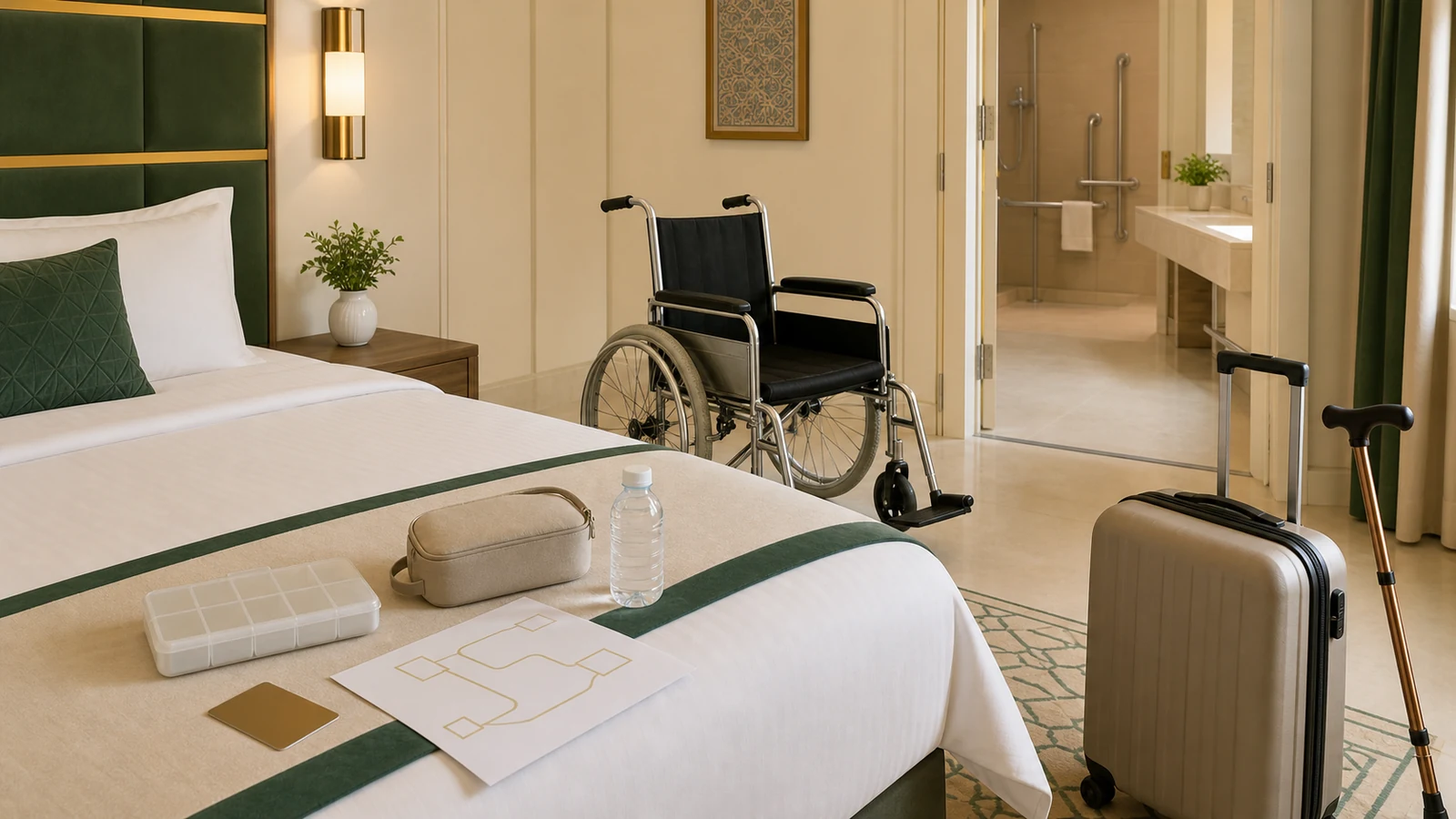
Start with your parent’s actual abilities and preferences, not a group’s programme. Arrange appropriate medical advice, assess walking and transfers, confirm accessible accommodation and plan wheelchair support before exhaustion makes it urgent.
Start with your parent’s actual abilities and preferences, not a group’s programme. Arrange appropriate medical advice, assess walking and transfers, confirm accessible accommodation and plan wheelchair support before exhaustion makes it urgent.
A common mistake is booking first and only later discovering steep routes, crowded lifts or an unsuitable coach. Build the trip around your parent’s needs and confirm the practical details before paying.
Decide with your parent and their clinician
Where a parent has a chronic condition or other health concerns, discuss the journey with their clinician early. Review medication, relevant medical records and practical risks such as exertion, heat, dehydration, disrupted sleep and falls. Seek advice tailored to the person rather than assuming age alone determines fitness to travel.
Include your parent in decisions about the pace, assistance they welcome and time to rest. Do not promise attendance at every prayer in the mosque before assessing the route and their needs. Agree what a comfortable, meaningful trip would look like for them.
Prepare medical information and insurance
Carry prescriptions using generic medicine names where possible, a medication list, allergies, relevant history, known blood group if available, and clinician and emergency contacts. Keep a paper copy and a protected copy accessible to an agreed companion.
Check cover for medical treatment, hospital care and repatriation. Ask specifically about age limits, pre-existing conditions, exclusions and the assistance arrangements in Saudi Arabia. Do not assume domestic healthcare coverage pays for overseas care.
Use the Saudi Ministry of Health’s current requirements and your departure country’s official advice. A screenshot from a previous season is not enough. Check medicine-entry rules before travelling, especially for controlled or restricted medicines.
Choose a hotel that reduces effort
Assess the journey from the room, through lifts and exits, along pavements and slopes, to an accessible mosque entrance. Ask about step-free access, the shower, grab rails, doorway widths, wheelchair space and the point where a vehicle can actually stop.
A hotel’s advertised distance does not show lift queues or a difficult return route. Request clear answers, photographs or measurements for features essential to your parent. If a shuttle is involved, confirm wheelchair carriage, boarding arrangements, times and the remaining walk after drop-off.
Plan wheelchair support in advance
Walking comfortably at home does not necessarily prepare someone for tawaf, sai, long corridors and dense crowds. Decide when support would help, who will push a manual wheelchair, where to collect it and where it can be returned or stored.
Official ramps, lifts, mobility services and permitted routes may change with operations and crowd levels. Follow current signs and staff guidance. Do not wait until your parent is exhausted to find out whether assistance is available or suitable.
Simplify transfers from door to door
Reserve a vehicle with enough room for travellers, baggage and the wheelchair, and confirm boarding needs. Identify the exact hotel vehicle entrance. Avoid unnecessary late-night changes after a tiring flight.
Before booking a train, check baggage and assistance arrangements and both station-to-hotel transfers. A direct vehicle may cost more but remove several changes. Compare the total effort, waiting, boarding and walking rather than only the intercity journey time.
Build a realistic daily rhythm
Keep arrival day light and allow recovery after the rituals. Plan regular rest and hydration appropriate to the person; anyone with a prescribed fluid restriction should follow their clinician’s advice. Limit optional visits and avoid long walks carrying heavy bags.
Allocate responsibility for medicines, documents and transport clearly, without removing your parent’s say in decisions. Make sure companions know the hotel, room and how to contact each other. Leave enough flexibility to shorten or cancel an outing when needed.
Prepare for an emergency
Identify how to reach first aid, a pharmacy and the insurer’s assistance service, including how it directs you to appropriate care. Keep important medicines and medical documents in cabin baggage.
If your parent’s condition deteriorates, seek appropriate help promptly rather than waiting for the programme to finish. In an immediate emergency, call local emergency services first. Save the Saudi emergency numbers and consular contacts on paper as well as on a phone.
Related reading: Accessible Umrah hotels for older and disabled travellers.
Frequently asked questions
Can an older pilgrim perform tawaf in a wheelchair?
Wheelchair-accessible arrangements exist, but services and permitted routes can vary with operations and crowds. Check current official guidance and follow staff directions; arrange assistance suited to the traveller.
How close should the hotel be?
There is no single suitable distance. Assess the actual journey from room to prayer area, including lifts, slopes, steps, heat, crowding and the return trip, against your parent’s abilities.
How much medication should we take?
Ask the prescribing clinician for an appropriate supply and contingency for the trip. Keep medicines in suitable original packaging with prescriptions or a report, and check Saudi entry and storage requirements.
Sources
- Saudi Ministry of Health — Health guidelines before Hajj and Umrah — Medication, medical records and preparation for older pilgrims and chronic conditions.
- Saudi Ministry of Health — Umrah and Visit — Current official health requirements; recheck for each traveller and date.
- Saudi Ministry of Hajj and Umrah — Umrah Guide — Women’s ihram clothing, practical supplies and accessible services.
- GOV.UK — Saudi Arabia: getting help — Local emergencies and British consular assistance.
FAQ
Can an older pilgrim perform tawaf in a wheelchair?
Wheelchair-accessible arrangements exist, but services and permitted routes can vary with operations and crowds. Check current official guidance and follow staff directions; arrange assistance suited to the traveller.
How close should the hotel be?
There is no single suitable distance. Assess the actual journey from room to prayer area, including lifts, slopes, steps, heat, crowding and the return trip, against your parent’s abilities.
How much medication should we take?
Ask the prescribing clinician for an appropriate supply and contingency for the trip. Keep medicines in suitable original packaging with prescriptions or a report, and check Saudi entry and storage requirements.